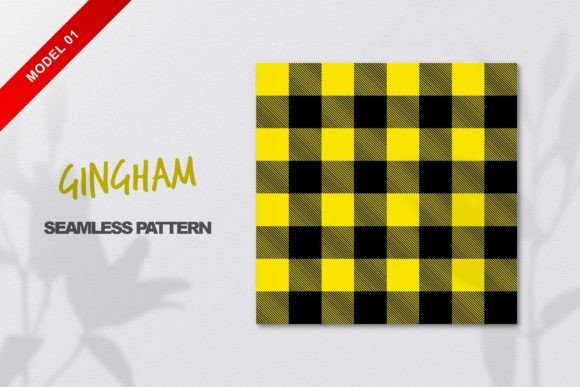
Yellow Gingham Seamless Pattern: A Creative Designer’s Essential Resource
Whether you're crafting custom stationery, designing textile prints, building a brand identity, or developing digital assets for web and print — the yellow gingham seamless pattern is more than just a cheerful background. It’s a versatile, scalable, and professionally crafted design element that bridges aesthetics with functionality. In this article, we’ll explore what makes this pattern special, why seamless vector patterns matter, how to use them effectively, and what you actually get when you download this particular resource — including the EPS CC file, the high-resolution JPG (4750 × 4750 px), and why “100% vector” isn’t just marketing jargon — it’s creative freedom.
What Is a Seamless Pattern — and Why Does It Matter?
A seamless pattern is a repeating design that tiles perfectly — meaning when copied side-by-side or stacked vertically and horizontally, there are no visible seams, gaps, or misalignments. Unlike a simple image that repeats with harsh edges or pixelated breaks, a seamless pattern flows continuously, creating a cohesive, professional look across any surface.
This matters because real-world applications rarely fit neatly into a single frame. Think of fabric yardage for apparel, wallpaper for interior design, packaging backgrounds, website overlays, or even social media templates. If your pattern doesn’t tile seamlessly, you’ll see awkward breaks — especially at scale. That undermines credibility and distracts from your message.
Gingham — traditionally a balanced, checked pattern formed by evenly spaced horizontal and vertical stripes — becomes even more powerful when made seamless. The yellow variation adds warmth, energy, and modern appeal — ideal for brands aiming for approachability, optimism, or summery freshness.
Why Vector? Understanding the Power of EPS CC Files
The EPS CC file included in this download isn’t just another format — it’s your gateway to infinite scalability and precision editing. EPS (Encapsulated PostScript) is a vector-based format fully supported by Adobe Illustrator and other professional design tools. Unlike raster images (like JPGs or PNGs), vector graphics are built from mathematical paths — not pixels — so they retain crisp clarity at any size: whether scaled to fit a business card or blown up across a 20-foot trade show banner.
“100% vector” means every line, curve, and color block is editable. You can:
- Change the shade of yellow with a single click (no color banding or loss of fidelity)
- Adjust the gingham scale — make checks larger for bold impact or smaller for subtle texture
- Swap colors to match your brand palette without reworking the entire pattern
- Isolate individual elements to integrate into larger illustrations or logos
- Export to SVG for responsive web use or PDF for print-ready documents
This flexibility is essential for designers working across multiple platforms — from branding agencies building cohesive visual systems to educators creating classroom materials, or small-business owners designing their own product labels and Shopify banners.
The High-Resolution JPG: Practicality Meets Professional Quality
While the EPS gives you full creative control, the included JPG (4750 × 4750 px) serves an equally important role — immediate usability. At nearly 4800 pixels square, this file delivers exceptional clarity for both screen and high-DPI print output. It’s ideal for:
- Quick mockups in Photoshop, Figma, or Canva
- Adding texture to presentation slides or pitch decks
- Backgrounds for email newsletters or landing pages
- Print-on-demand services like Redbubble or Printful (where vector uploads aren’t supported)
- Sharing with non-designer collaborators who need a ready-to-use image
Importantly, this JPG is generated directly from the vector source — ensuring color accuracy, sharp edges, and zero compression artifacts. It’s not a downscaled screenshot or a low-res placeholder. It’s production-ready.
Real-World Uses: Where Yellow Gingham Fits In
You might assume gingham belongs only on picnic blankets or vintage kitchenware — but modern design has reimagined it as a dynamic, context-aware tool. Here’s how the yellow gingham seamless pattern shines across industries:
Educational Materials & Learning Tools
Teachers and curriculum designers use soft, friendly patterns like yellow gingham to create visually calming worksheets, flashcards, or digital lesson backgrounds. Its consistent rhythm supports focus without overwhelming young learners — and the warm tone promotes positivity and engagement.
Small Business Branding
Cafés, boutiques, craft studios, and wellness brands often adopt yellow gingham to convey authenticity, handmade charm, and approachability. Use it subtly behind logos, as a border on packaging, or as a unifying texture across Instagram stories and email headers — all while maintaining brand consistency thanks to the editable vector source.
Digital Product Design
UI/UX designers incorporate seamless patterns as low-contrast backgrounds for dashboards, onboarding screens, or app splash pages. Yellow gingham adds personality without competing with interface elements — especially when desaturated slightly or layered with transparency.
Textile & Surface Design
Fashion and home décor designers rely on seamless repeats for fabric printing. With this pattern, you can test how the check size interacts with garment seams or pillow dimensions — then adjust spacing in Illustrator before sending files to manufacturers.
Common Misconceptions — Clarified
Misconception #1: “All gingham looks the same.”
Not true. While classic gingham uses equal-width stripes, variations exist in scale, contrast, color saturation, and stripe weight. This yellow version balances brightness with subtlety — avoiding glare while retaining vibrancy.
Misconception #2: “JPGs are ‘lesser’ than vectors.”
They serve different purposes. Vectors enable editing; JPGs ensure compatibility and speed. Having both means you’re prepared for any workflow — no compromises.
Misconception #3: “Seamless = automatic.”
Creating a truly seamless repeat requires careful alignment, anchor point management, and testing across multiple tile instances. This pattern has been rigorously tested — saving you hours of troubleshooting.
Getting Started: Tips for First-Time Users
If you’re new to working with seamless patterns or vector files, here’s how to begin:
- Open the EPS in Adobe Illustrator: Go to File > Open, select the EPS, and immediately double-click the pattern swatch in the Swatches panel to edit its base tile.
- Customize colors: Select the yellow shapes using the Direct Selection Tool (A), then apply new fills from the Color or Swatches panel.
- Scale the pattern: With the pattern applied to a shape, go to Object > Transform > Scale, check “Patterns”, and adjust percentage — no distortion, no blur.
- Export for web: Drag the pattern onto your artboard, then choose File > Export > Export As, selecting SVG for crisp scaling or PNG-24 for transparency support.
- Use the JPG instantly: Drag it into Canva, PowerPoint, or your CMS — no setup needed.
Final Thoughts: More Than Just a Pattern
The yellow gingham seamless pattern is a small but strategic design asset — one that reflects thoughtful craftsmanship, technical precision, and empathetic understanding of how designers actually work. It’s not just about aesthetics; it’s about removing friction between idea and execution. Whether you’re iterating rapidly for a client, preparing assets for global print distribution, or teaching students about repeat design principles, having a reliable, editable, high-fidelity pattern saves time, reduces errors, and elevates outcomes.
And remember — if anything feels unclear, if you run into compatibility questions with your software, or if you’d like guidance adapting the pattern for a specific use case, the creator, Mangata, invites your questions. That kind of direct, supportive access is rare — and valuable.
So go ahead: scale it, recolor it, layer it, print it, animate it. With this resource, the only limit is your imagination — not your file format.